1999–2003
On the test bench
Put two cards with the same chip next to each other. Check the cooler, count the outputs, then look at what happens when the game gets busy.
Who ran the test?
A 3DChipset news item often began with a note from another review desk. Solomon named the publication, picked out the part of the review that mattered and left readers with a question. A score in one of those reports belonged to the named tester. The site also ran its own hardware reviews, including Goldfield's All-In-Wonder Radeon 8500DV.
The November 1999 list ranged from the Asus V6600 and Elsa Erazor X to Annihilator versus WinFast and a 3D Blaster RIVA TNT2. ATi's Rage Fury MAXX had its own review slot. By August 2000 a reader could compare a small Hercules 3D Prophet II MX with a 64 MB Radeon on the same day.
All-In-Wonder on an editing PC
Goldfield’s review, featured on March 18, 2002, put the 8500DV through its paces as an all-in-one editing board. Its tuner, video connections and multimedia tools belonged in the test alongside the gaming runs. The review praised the refinement of the package and also found compatibility problems in games.
Other desks found different uses for the same board. Ascully wrote about a machine used for both editing and playing. PC Rave's Benjamin Sun returned to the experience of older games on the new card. Someone looking for DVD playback and TV output had a different set of needs from someone bringing in footage from a video camera.
The cooler that cost a slot
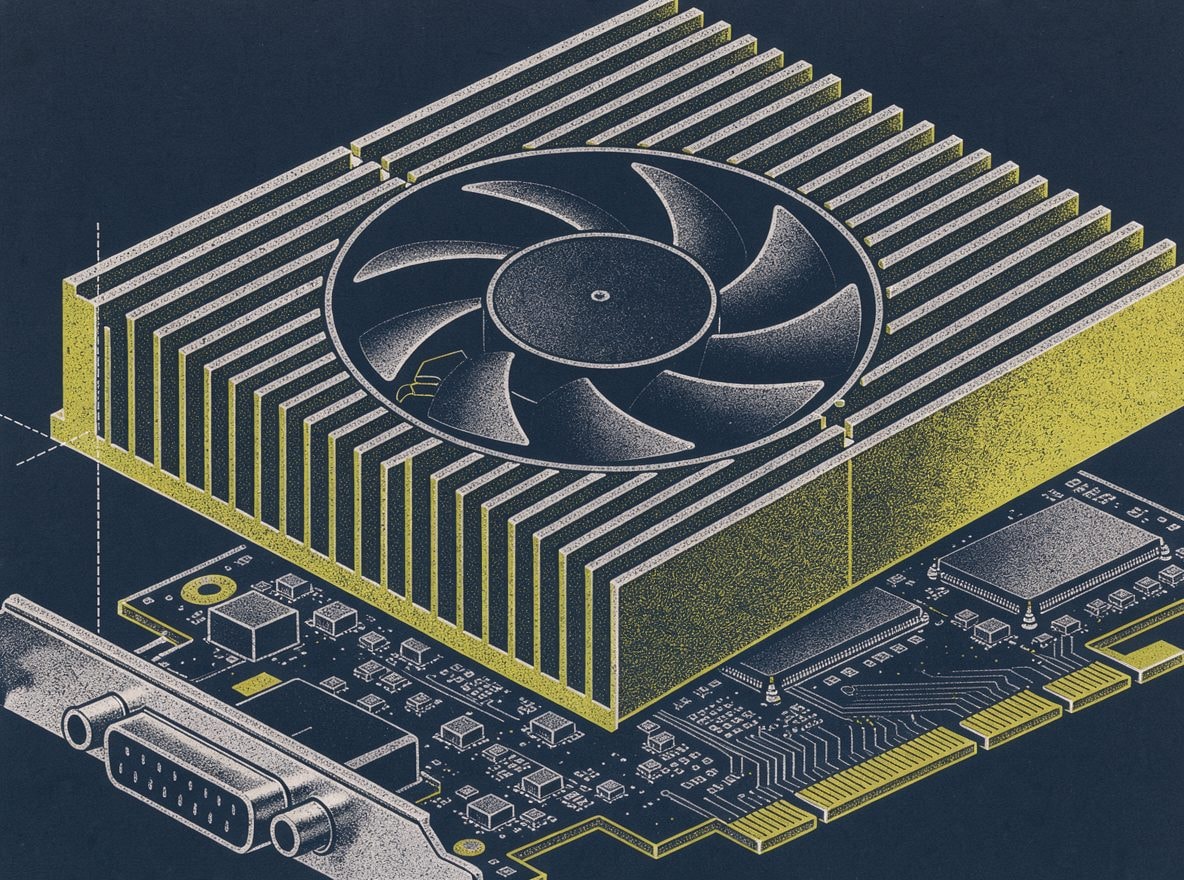
On October 31, 3DChipset featured Jeff Bouton’s HotHardware review of the Abit Siluro Ti4200 OTES. The unusual heat-pipe arrangement occupied space at the next PCI slot. Would the extra cooling make that lost slot worthwhile? On the sample tested, the gain over stock cooling was small. The interesting measurement was the difference from an ordinary Ti4200 under the same conditions.
A heavy Leadtek A250 Ultra raised a more mechanical question. Digit Life noted how much support its cooler needed from the AGP retention clip. A Thermaltake copper cooler on Viper Lair's June bench produced some extra headroom, but one result could not predict another chip's limit.
Radeons and their host CPUs
Viper Lair's November 1 Radeon 9700 Pro review put the test PC back in the frame. The reviewer suggested at least an Athlon XP or a Northwood Pentium 4 to get the benefit of this board and doubted that even the overclocked P4 had exhausted it. That was a judgment about a 2002 system, with the games and benchmarks available to it.
Neoseeker's FIC AT010 comparison found only a small difference from ATi's own 9700 Pro. At the other end of the range, the Radeon 9000 Pro's 275/275 MHz test led Solomon to ask for an 8500 on the same graph. A family number, a clock speed and the host CPU each answer a different part of the question.
The things that rarely fit on a chart
- Display outputs
- OC Addiction liked the Albatron Ti4200 128 MB bundle but missed the DVI-to-D-Sub adapter. The connector on the monitor mattered once the box came home.
- Board layout
- FiringSquad traced the similarity between the Tyan Tachyon G9000 Pro and ATi's design to the output circuitry integrated in the Radeon 9000 chip.
- Memory
- Digit Life compared four 128 MB GeForce3 Ti200 boards with a 64 MB Gainward. Their tests gave little reason to prefer the larger capacity for those games.
- Filtering
- In the June Ti4200/8500LE comparison, enabling antialiasing and enabling anisotropic filtering changed the relative results. Record both settings next to each number.
- Noise and power
- The February 2003 GeForce FX discussion moved from frame rates to the fan, power supply and second slot, especially in a small Shuttle case.
The 2003–04 board reports follow them onto later hardware. The reader comments take up the results. For the words printed beside the graphs, see the graphics glossary.