Warp11 Radeon BIOS Record
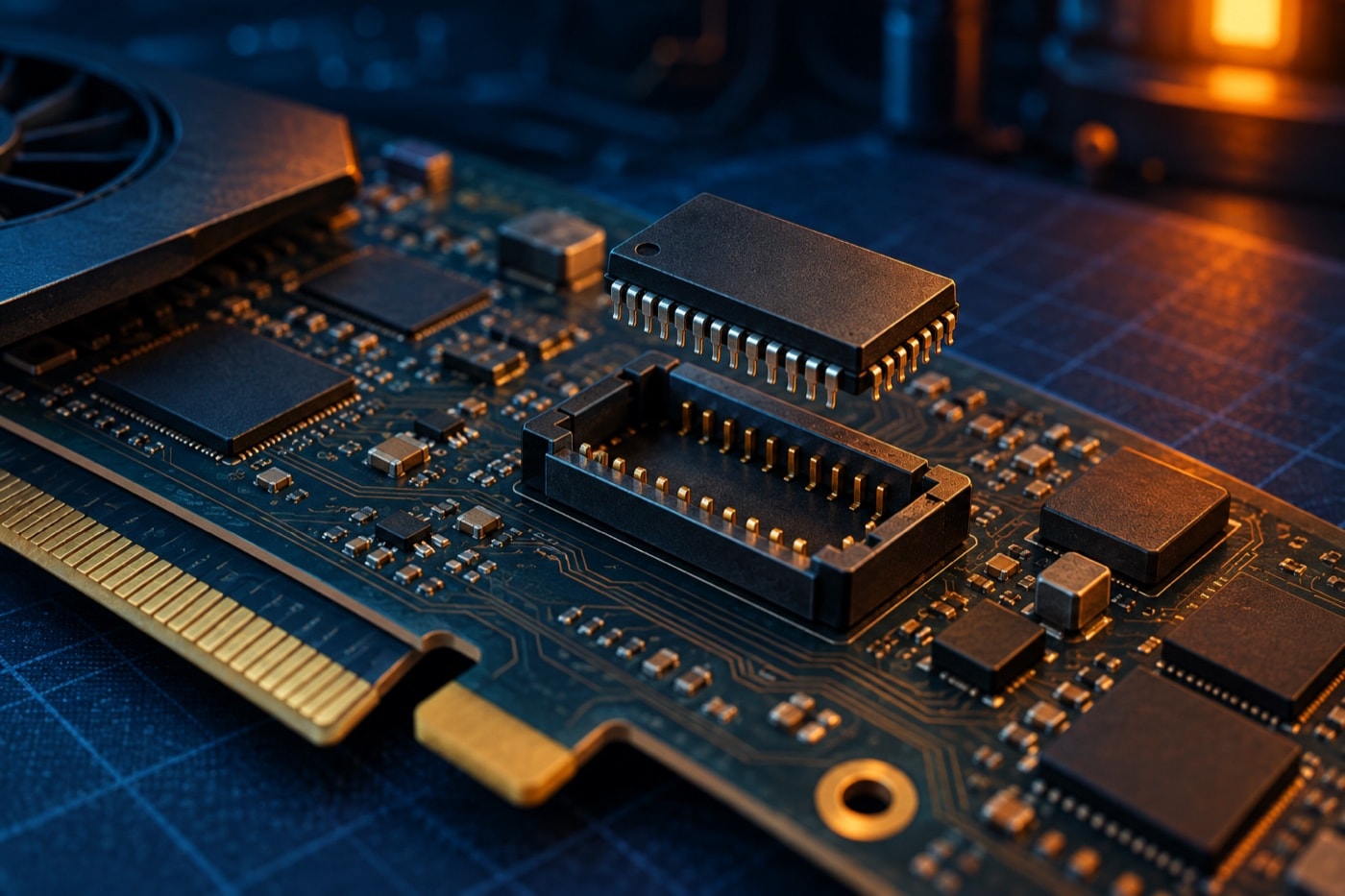
Warp11 was the label for 3DChipset’s dedicated Radeon BIOS coverage. The files and operational material are unavailable, and no firmware action is invited.
Where Warp11 fit
3DChipset grouped firmware material under NVIDIA, Matrox and ATi headings. Warp11 appeared under “ATi Radeon BIOS Files,” beside a category for Radeon flash applications. That separation is significant: 3DChipset treated a firmware image and the software used to write it as different kinds of material, even though readers often discussed them together.
Contemporary links called it “Warp11 BIOS files” and treated it as a known Radeon resource. The available evidence does not establish a safe list of board models, firmware revisions, clock changes, or claimed benefits. A precise blank is more useful than a confident guess when firmware and hardware compatibility are involved.
Why board identity mattered
Retail graphics cards could use related chips while differing in memory devices, printed-circuit-board layout, video outputs, and board firmware. A name printed on a box was not necessarily enough to prove that two boards accepted the same image. Firmware experimentation therefore demanded a level of identification that a simple index link could not provide.
That risk remains part of the history of BIOS experimentation. The appeal was obvious to the early-2000s enthusiast: settings embedded in firmware seemed to offer a persistent way to alter a board’s behavior. The downside was equally clear. A mismatch or interrupted write could make the card unusable, and modification could affect warranty coverage.
What can still be learned
The Warp11 branch documents the intensity of Radeon experimentation during a period when enthusiasts tracked small differences among board revisions and driver packages. It also shows why BIOS material deserved its own navigation category rather than being mixed into ordinary driver records. Drivers lived at the operating-system layer; firmware acted earlier in the device’s startup and carried different consequences.
For a broader view of how 3DChipset organized release information, see the driver history guide. For terms such as BIOS, overclocking, and VIVO, use the graphics glossary. The BIOS overview gives the controlling safety context for this material.
Why the Warp11 name persisted
The name became shorthand in enthusiast discussions because it represented a tempting idea: that a board sold at one tier might share enough hardware with a neighboring model to expose a different configuration. Similar-looking boards encouraged that speculation, but appearance was not proof. Memory speed, electrical design, device identifiers, display components, and vendor revisions could differ even within a single retail name.
Period reports were also written before years of component aging, replacement cooling, second-hand modification, and uncertain prior use complicated the surviving hardware. A modern reader cannot safely transfer an anecdote from one board to another. The useful historical fact is that the experiment existed and influenced how enthusiasts discussed product segmentation. The terminology, relevant Radeon generation, and reasons for caution are historical; no files, checksums, commands, or step-by-step instructions are provided.
Interpreting old modification claims
Claims of a successful conversion often measured only whether a machine started or a benchmark completed. They did not necessarily test long-term stability, display output, thermal behavior, or every graphics feature. Contemporary success stories should be read as individual observations, not universal compatibility evidence. The broader BIOS history explains why board-specific firmware remained a high-risk subject.